
The Nomad is a series of stories, fascinations, encounters, observations, experiences, joy of the moments by me, Ulrike Reinhard – all around my travels. Stay tuned!
The following encounter took place around 1985. The photos were taken in 2023, when I returned to the Grand Canyon once again. I’ve added a bref summary in the beginning! Enjoy the read 🙂
A solo road trip to the Grand Canyon leads to an unexpected encounter with a quiet, enigmatic man who seems to belong more to the wild than to the world of roads and rules. What begins as mild suspicion turns into an impulsive decision: a shared descent into the canyon, an overnight plan gone wrong, and a grueling climb back up through darkness and exhaustion. Along the way, stories of war, solitude, survival, and healing unfold against one of the most vast and indifferent landscapes on earth. This is about trust between strangers, the thin line between recklessness and grace, and how brief encounters can leave a lifelong imprint.
On my first AAA road trip out of New York City – headed toward Tucson, Arizona, and ultimately San Francisco – I detoured past the Grand Canyon. Monumental, ancient, impossibly vast. Its sheer size, depth, and beauty were enough to leave me speechless.
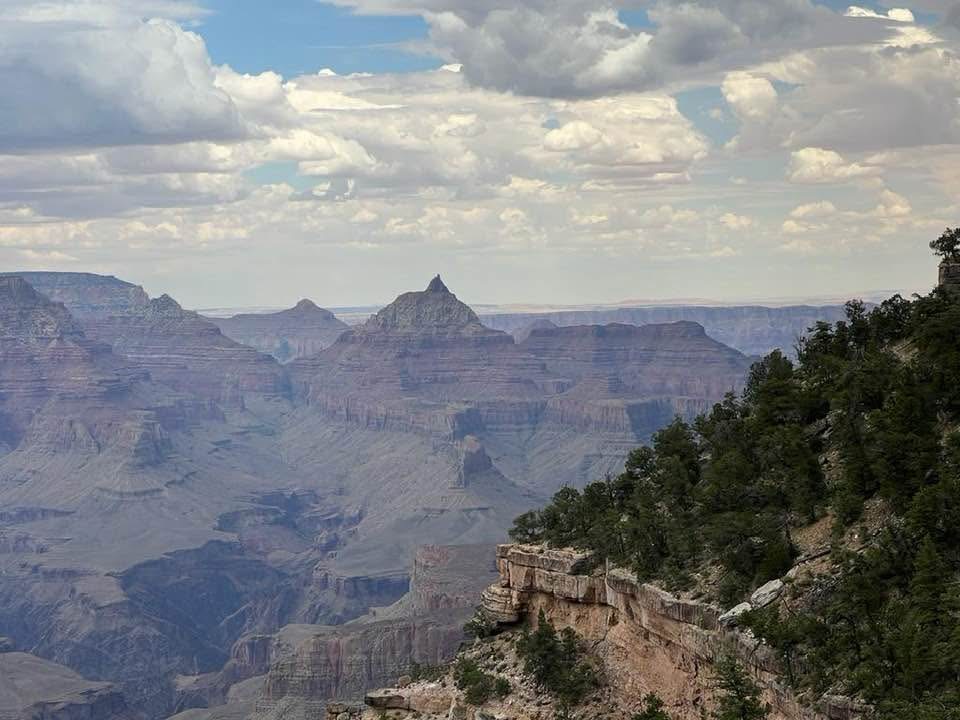
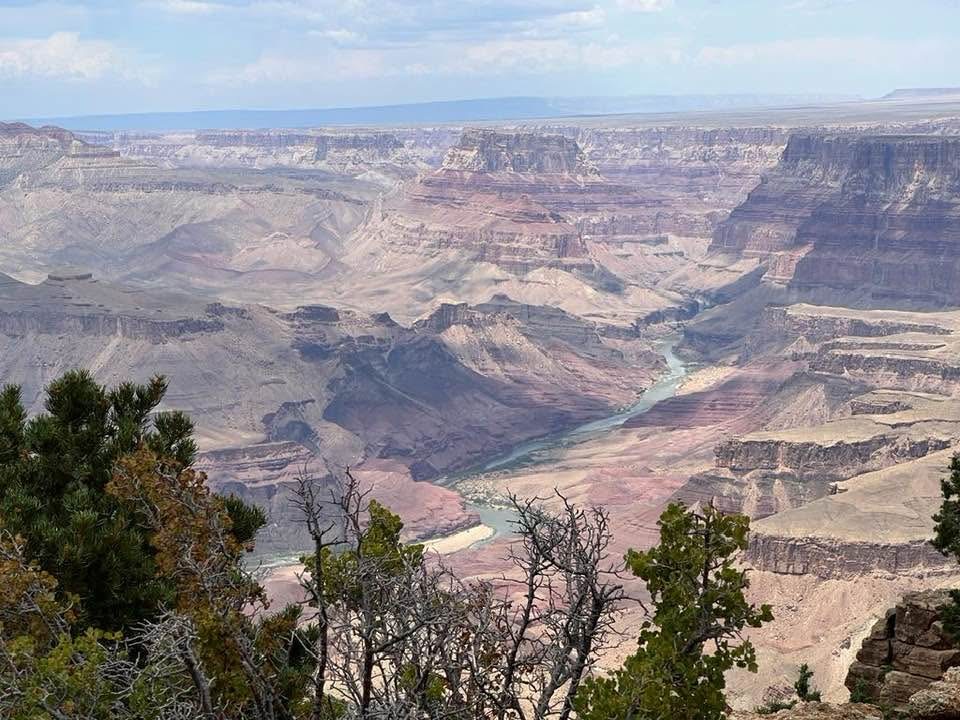
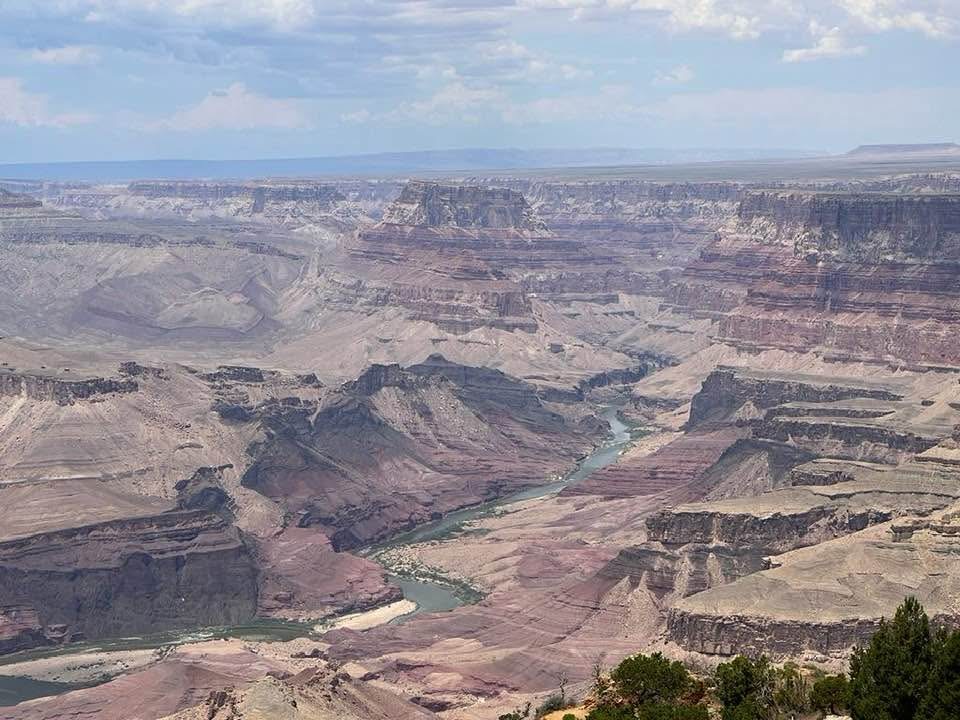
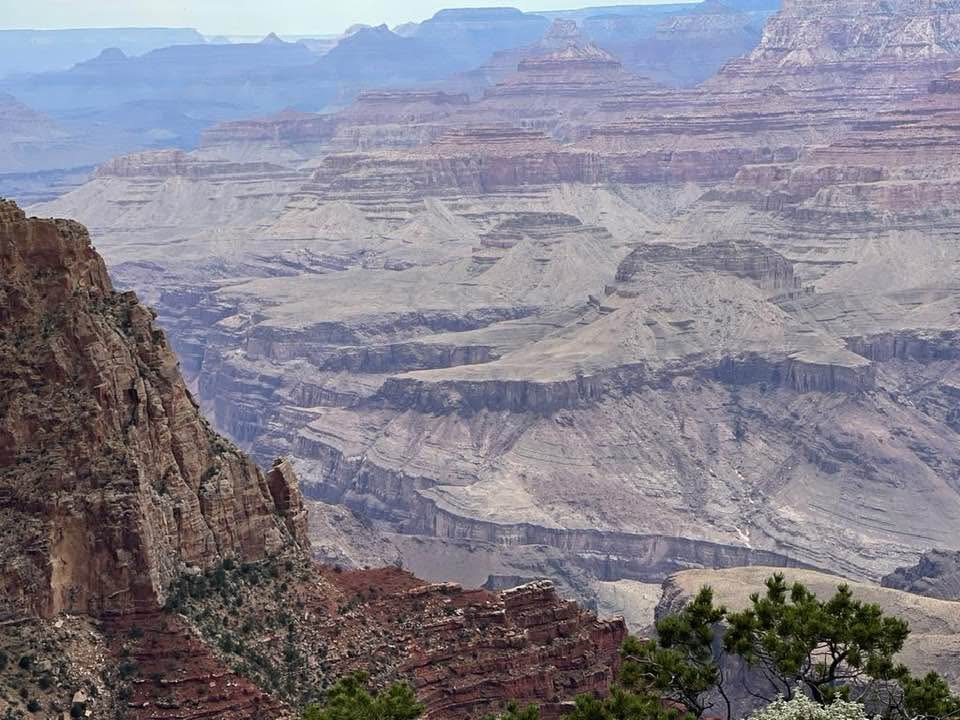
But as overwhelming as the canyon was, what truly stayed with me was an encounter with a man whose real name I’ve long forgotten. I call him Travis here – there’s a good chance that actually was his name.
After a few scenic pullouts, I began to notice a pattern. Each time I left the main road to stop at a viewpoint, the same car followed. It parked a short distance behind mine. Again. And again. By the fourth stop, my curiosity had edged into irritation. I decided to stop wondering and start asking the driver.
I walked straight up to him. “Are you following me?”
He was probably in his late thirties or early forties, with long blond hair and a face carved by sun and wind. His features were sharp, his skin deeply tanned, the kind of face where every wrinkle seemed to carry a story. There was something calm about him, almost gentle. Shy, even. He looked oddly relieved that I had broken the silence.
“Yes,” he said simply. Then, after a pause, “I realized you’re traveling alone. I know these mountains well. I’m used to nature. I thought I might be… helpful.”
It wasn’t the answer I expected, but perhaps that was because I had no expectations to begin with.
I wasn’t sure how to react, but instead of turning away, we kept talking. I asked him where he was headed and what he was doing out here. He told me he was coming from Yosemite and driving all the way to Brownsville, Texas. He was moving into a lighthouse. To live there. To work there. To take care of it.
A lighthouse.
Then he asked about my journey. And so I told him my story.
“And, are you going to hike the Canyon?” he asked, keeping the conversation alive.
I was planning to, at least in theory, but hesitation tugged at me. It was already past noon, and I had no idea if there was room at the campground. Plus, the thought of hiking down and then back up in the same day was… daunting. From the rim to the Colorado River, the elevation change was a staggering 1,500 meters — not exactly a casual stroll.
I shared my doubts, expecting him to shrug and move on. Instead, he offered a solution: we could call the campground and check. And — plot twist — he would come with me. A few minutes later, the call confirmed it: the last two single tents were available. We packed our gear, parked our cars, and started the descent together.
Crazy, I thought. And indeed, it was going to get even crazier.
He carried a backpack stocked with torches, headlamps, water, and enough food for both of us. I, on the other hand, was woefully underprepared — actually, not prepared at all. Looking back, I was naive, maybe even a little reckless, but that’s somehow always been my style when it comes to journeys.
The longer we hiked, the more I felt at ease with Travis. He moved through the canyon as if it were an extension of himself — pointing out plants, spotting animals, reading the subtle shifts in the canyon’s air. He could sense an eagle even before it took flight. Travis was utterly in tune with the world around him, and that quiet mastery was deeply comforting.
Midway, we paused at a small campground for a breather. I couldn’t resist asking him what made him so attuned to nature. His answer hit me like a bolt.
“I lived in a cave in Yosemite for more than two years. Ate whatever the forest provided.”
I blinked. “But… why in a cave? And why so far out?”
His gaze didn’t waver. “I was in the Vietnam War. When I came back, I couldn’t live in a city anymore. I couldn’t deal with people. So I went into the wild. I was used to being alone, surviving on what the forest or jungle offered. That’s where I found peace.”
That was a revelation — and somehow, the canyon suddenly felt even more alive.
We continued in silence. Travis led the way, and I followed in his footsteps, careful not to break the rhythm. Apart from a few explanations about the canyon — which plant was which, which ridge led where — we didn’t speak. I had a thousand questions swirling in my mind, but somehow, they stayed there.
Maybe two hours later, we reached the campground. The sun was dipping low, an hour from dark. And then the punch: the last two tents had already been claimed by early arrivals. No space left. Nothing we could do. A real bummer. The hike down had been not really exhausting, but climbing up now felt just like this, terribly exhausting. The rangers told us we have to go back, we can’t stay inside.
We paused by the river, letting the water’s cool rush wash over our legs. In the distance, bears ambled through the landscape. My first sight of wild bears — majestic, indifferent, completely at home. The rangers, and of course Travis, assured me it was normal. “This is their habitat,” they said. And indeed, it felt more theirs than ours. Slightly reassuring, if not exactly comforting for the climb back up.
We began the ascent just as dawn broke, the canyon slowly waking around us. Four to five hours lay ahead, mostly in darkness. I knew the climb would be grueling, but staying wasn’t an option. With headlamps cutting through the growing darkness, our climb upward began.
We moved slowly along the trail, step by careful step. Travis walked behind me now, his eyes and ears scanning the forest. “Slow down,” he would whisper, “there’s something around the next curve.” And sure enough, a massive male goat with proud, curling horns appeared exactly where he said it would. At that point, I stopped questioning his instincts – I trusted them completely. His senses operated on a level far beyond mine. Occasionally he’d name the birds whose calls echoed through the canyon, grounding me in the rhythm of the wild and the night.
I stayed in the middle of the path, my legs started aching but steady, the path alternating between steep inclines and gentler stretches. We paused again at the midway camp. The rangers were there, having been alerted to our progress. They exchanged a few polite words, asked how I was holding up, and reassured me that the hardest part of the climb was behind us. Three hours in … and the canyon had begun to leave its mark.
The higher we climbed, the slower I became. Every incline turned into a negotiation, every step a small victory. I was so absorbed in the simple task of getting myself up there that I completely forgot about bears, snakes, spiders – anything that might be lurking in the dark. Fear had narrowed to focus. All that existed was the next step, and then the next.
Another three hours later, I finally made it. I dropped onto the very bench where we had started hours before, utterly spent, and thanked Travis. I knew he could have done the whole hike in half the time. Probably less.
I drained a bottle of water, my legs trembling uncontrollably. Saying I was exhausted would be generous – it didn’t come close. I had made it, and all I wanted was to collapse into the car and disappear into sleep.
Only then did I learn that this, too, was not allowed. No camping. No sleeping in the car. Not inside the National Park. Rules were rules.
So we drove on, somehow, almost on instinct. About thirty kilometers later – just outside the National Park – we pulled over, parked the cars, and within moments I was fast asleep, the kind of sleep that swallows you whole.
I woke the next morning to a loud knock on my window. A sheriff stood there, Travis beside him, calm as ever. The sheriff asked what I was doing out there. I told him the story—clearly the same one Travis had already shared. He nodded, wished us well, and drove off, just like that.
Travis fired up his camping stove and made coffee, then omelets—simple, perfect, almost sacred. I was ravenous. It was, without question, the best omelet I’d ever eaten. After breakfast, we hugged. He handed me his phone number at the lighthouse. We spoke once after that. But we never met again.